Following a keto diet in Pakistan might seem difficult at first. Our everyday meals are deeply rooted in roti, rice, and traditional sweets, which are all high in carbohydrates. But shifting to a low-carb lifestyle doesn’t mean disconnecting from your culture or giving up desi flavors entirely. It simply means making smarter, more intentional choices.
Brands like Soghat-e-Khas are helping bridge that gap by offering traditional foods made with quality ingredients. For example, options like quince murabba can be enjoyed in controlled portions, while savory additions like chickpeas pickle bring bold desi flavor to keto meals without relying on heavy carbs.
What Is a Desi Keto Diet?
A keto diet focuses on drastically reducing carbohydrates and increasing healthy fats so your body enters a metabolic state called ketosis. In this state, your body burns fat for energy instead of glucose.
A desi keto diet adapts this principle using Pakistani foods. Instead of following Western meal plans, you modify traditional dishes to make them low-carb and keto-friendly.
This includes:
- Replacing wheat-based foods with low-carb alternatives
- Reducing sugar and refined ingredients
- Using healthy fats like desi ghee and mustard oil
- Choosing whole, minimally processed foods
The goal of keto diet plan is to stay within your carb limits while still enjoying familiar meals.
Why Traditional Pakistani Diets Feel High in Carbs
Understanding the challenge helps you solve it better. Most Pakistani meals revolve around:
- Roti (wheat-based)
- Rice (high glycemic index)
- Sugary desserts like kheer, halwa, and murabba
- Tea with sugar multiple times a day
These foods cause rapid spikes in blood sugar and can make it harder to maintain consistent energy levels, especially for diabetics or those trying to lose weight.
However, not all traditional foods are problematic. Many can be adjusted or consumed strategically.
Keto-Friendly Pakistani Foods You Can Still Enjoy
The good news is that a large part of desi cuisine already fits into a keto lifestyle when prepared correctly.
1. Meat and Protein-Rich Dishes
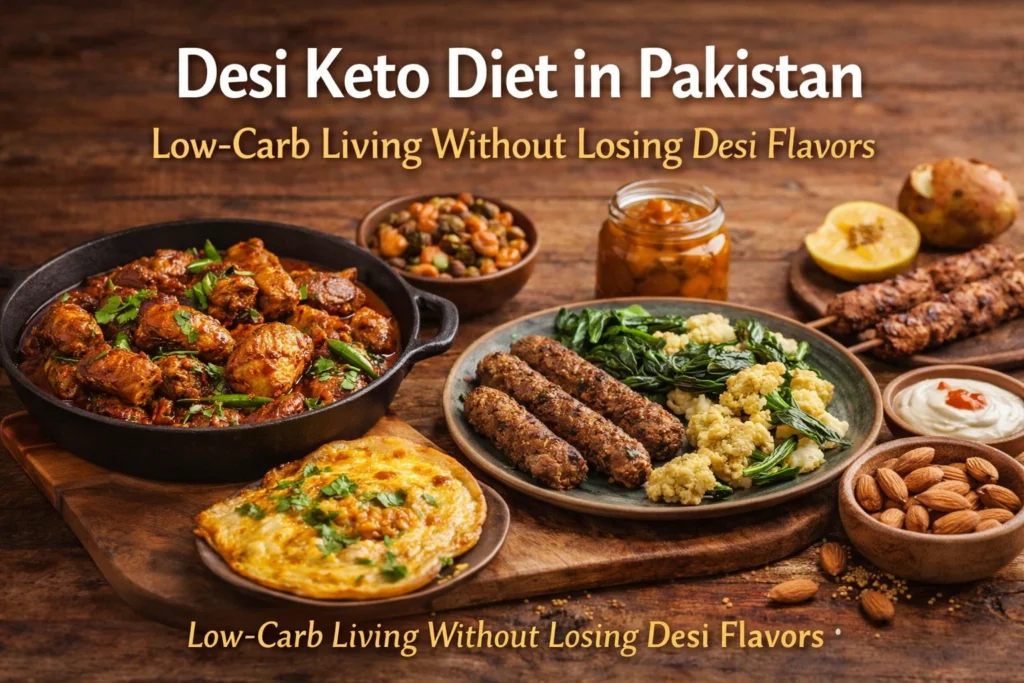
Chicken, beef, and mutton are naturally low in carbs. Dishes like:
- Chicken karahi
- Seekh kebabs
- Grilled tikka
are excellent keto options when cooked without excessive onions or thick gravies.
2. Eggs and Dairy
Eggs are one of the most versatile keto foods. Pair them with butter or cheese for a filling meal. Paneer, cream, and yogurt (in moderation) also work well.
3. Low-Carb Vegetables
Vegetables like:
- Spinach (palak)
- Okra (bhindi)
- Cauliflower (gobi)
- Zucchini and cabbage
can easily replace high-carb sides like potatoes or lentils.
4. Pickles (Achar) as a Flavor Booster
Pickles are often overlooked in keto diets, but they can be a powerful addition. Made with oils, spices, and fermented ingredients, they enhance flavor without requiring large quantities.
Options like chickpeas pickle add variety and taste to otherwise simple meals. While chickpeas themselves contain carbs, small portions used as a condiment can still fit into a flexible low-carb plan.
The Truth About Murabba on a Keto Diet
Murabba holds a special place in Pakistani households, often associated with tradition and natural nourishment. However, due to its sugar content, it doesn’t strictly align with a keto diet.
That said, context matters.
For individuals who are:
- Transitioning into keto
- Following a moderate low-carb lifestyle
- Looking for natural alternatives to processed sweets
small portions of traditional foods like quince murabba can be included occasionally.
The key is portion control and awareness. Choosing a natural, traditionally prepared option is still far better than consuming highly processed desserts filled with artificial ingredients.
Expert Insight from Soghat-e-Khas
According to Taha, founder of Soghat-e-Khas:
“We’ve seen that people don’t necessarily want to give up traditional foods, they just want healthier ways to enjoy them. When you shift from refined sugar and processed ingredients to natural, thoughtfully made products, your entire diet improves.”
This perspective aligns perfectly with the desi keto approach. It’s not about restriction, it’s about smarter choices.
Building a Sustainable Desi Keto Meal Plan
One of the biggest reasons diets fail is lack of practicality. A sustainable desi keto plan should be simple, flexible, and based on foods you already enjoy.
Sample Daily Plan
Breakfast:
Omelette cooked in desi ghee with green chilies and coriander
Lunch:
Chicken karahi with sautéed spinach or cauliflower
Snack:
Handful of almonds or a small bowl of yogurt
Dinner:
Grilled kebabs with salad and a side of pickle for added flavor
This type of meal plan keeps you full, energized, and within your carb limits.
Common Mistakes to Avoid
When starting a desi keto diet, people often make a few common mistakes:
1. Completely Eliminating Traditional Foods
This leads to frustration and makes the diet hard to sustain.
2. Ignoring Hidden Carbs
Onions, sauces, and packaged spices can add unexpected carbs.
3. Overeating “Keto-Friendly” Foods
Even low-carb foods can slow progress if consumed in excess.
4. Not Planning Meals
Without planning, it’s easy to fall back into roti and rice habits.
How to Balance Tradition and Nutrition
The real success of a desi keto diet lies in balance. Instead of thinking in extremes, focus on:
- Replacing instead of removing
- Controlling portions rather than eliminating foods
- Choosing natural over processed
- Building habits you can maintain long-term
This approach not only supports weight management but also improves overall metabolic health.
Final Thoughts
Adopting a desi keto diet doesn’t mean leaving behind Pakistani food culture. It means evolving it.
By focusing on:
- Protein-rich traditional dishes
- Low-carb vegetables
- Healthy fats
- Controlled portions of traditional treats
you can create a lifestyle that is both enjoyable and effective.
With mindful choices and a practical approach, staying low-carb becomes less about restriction and more about smart, sustainable living.